

News
Space surveillance: What role for France?
By Amandine Delom, Communications & Marketing Manager, Groupe HEMERIA
The democratization of space technologies with New Space has led to an increase in space traffic, and consequently an exponential rise in the number of objects in orbit (over 30,000 satellites by 2030), and space debris (over a million to date).
Added to this challenge is a major safety issue linked to geopolitical changes and new technological capabilities, which are leading to hostile and even aggressive behavior.
Faced with these growing threats, and to speed up the monitoring process, the European Union has introduced Space Situational Awareness (SSA) into its 2021-2027 space program, in order to guarantee the safe, sustainable and secure use of space, thus facilitating the contribution of industry and start-ups.
SPACE SURVEILLANCE, AN INDISPENSABLE SECURITY TOOL
Until the 2000s, space surveillance was mainly carried out by space agencies (NASA, ESA, ROSCOSMOS...) using radar and telescope-based surveillance systems whose origins date back to the Cold War, and whose interest was exclusively military.
In 2014, the European Space Agency (ESA) set up the EU SST (Space Surveillance and Tracking) program, with the aim of detecting and identifying objects in different orbits to reduce the risk of in-orbit collisions. The EU SST consortium originally comprised the French (CNES), Italian (ASI), Spanish (CDTI), German (DLR) and British (UK SA) space agencies, before expanding to include 15 member states.
Since July 2017, France has held the presidency of the consortium, which is part of the European Union's 2021-2027 space program. As part of this consortium, France and Spain are responsible for assessing the risk of collision, issuing alerts and proposing avoidance maneuvers (CAESAR service). These missions are carried out by CNES and the French Space Command, using the GRAVES radar in particular.
SERIOUS RADAR, A MAJOR FRENCH DETECTION ASSET
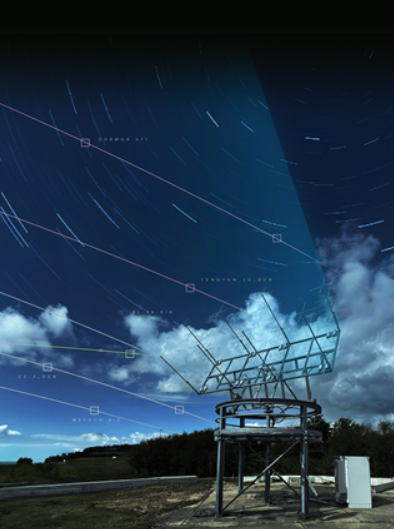
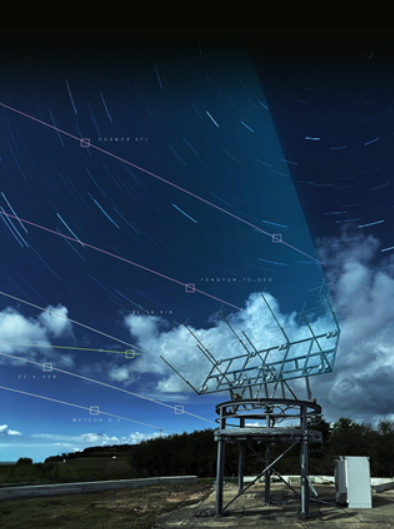
Commissioned in 2005 and developed by Onera under contract from the French defense procurement agency (DGA), the GRAVES (Grand Réseau Adapté à la VEille Spatiale) radar is a French system for detecting space objects in low orbit (between 400 and 1000 km altitude).
The first European space watch system, it provides France with fully autonomous information on the space situation.
The USA, Russia and China are the only countries with an identical capability, so the GRAVES radar enables France to position itself against these major space powers.
FRENCH MANUFACTURERS IN THE SPACE SURVEILLANCE RACE
However, France lacks the surveillance resources needed to observe and catalog space debris. This is why space surveillance is a priority in the space section of the France 2030 investment plan.
In April 2023, CNES awarded contracts to five consortia of French start-ups and manufacturers, including Airbus Defence & Space, ArianeGroup, Safran, ShareMySpace, U-Space and Infinite Orbit, to develop new satellite and space debris monitoring systems.
HEMERIA, THE NEW ENTRANT IN SPACE SURVEILLANCE
In March 2024, the Hemeria group announced the acquisition of the start-up OPENSCI, which became Hemeria Sensing, and whose activity in anticipation, detection and characterization of space launches and ballistic launches, enables the company to develop a new strategic data services offering, responding to the challenges of sovereignty.
This new business was quickly supplemented, in October 2024, by space surveillance services, following the acquisition of a 70% stake in start-up Astareon alongside Onera (30%). Astareon, renamed Hemeria Surveillance, provides data from radar sensors based on GRAVES technology with an independent catalog of over 10,000 objects in low earth orbit (LEO), enabling precise tracking and identification of space objects, providing information on their position, nature and future trajectories.
As the latest entrant to this market, already occupied in France by ArianeGroup, or start-ups Aldoria and Look Up Space, Hemeria intends to stand out for the complementary nature of the offerings of its two new entities, for its privileged access to the GRAVES radar and the MEDOC station, and for its already substantial catalog that sets it apart from its competitors.



No comment
Log in to post comment. Log in.